Things To Do In Taghazout Bay, Agadir

There is plenty to do in Taghazout and Agadir when the surf is flat: yoga on our terrace, Paradise Valley, the biggest market in North Africa and day trips to Essaouira and Marrakech.

Taghazout has been a surfers' village since the 1970s, and the weather is good almost all year, except in summer, when the days can be very hot. Here are 10 of the best things to do in Taghazout and Agadir: the trips and places we suggest to our guests on flat days.

  • Souk El HadAbout 30 minutes away
  • Day tripsEssaouira and Marrakech, about 3 hours
  • IncludedParadise Valley and Agadir (Family and Premium)
  • Yoga1 hour sessions
  • Best for flat daysTrips are organised when the surf is flat
  • Remote workHigh-speed fibre in Taghazout Bay

Things to do

Things to do in Taghazout: the 10 best

From surf and yoga on your doorstep to day trips across the region.
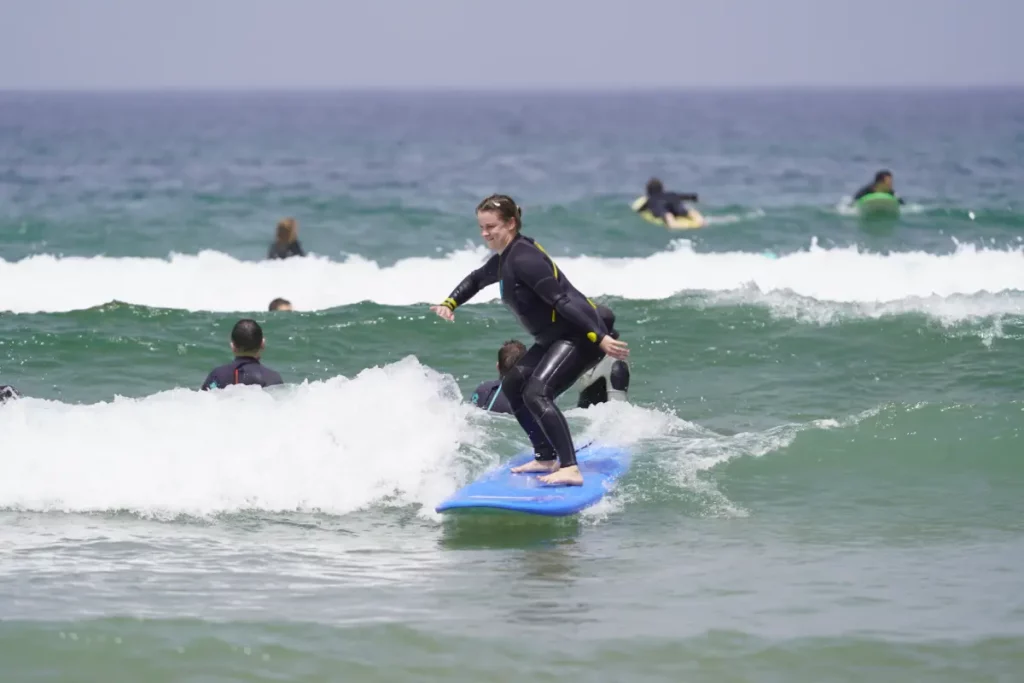
Surfer riding a green wave on a blue board during a surf lesson in Taghazout
A surf lesson in Taghazout Bay
1

Surf in Taghazout Bay

Surfing is the reason most people come. Taghazout Bay has waves for every level, with soft sandy beaches for beginners and famous right-hand points for experts. Our surf lessons run for 2 hours a day in groups of 6 students per instructor.

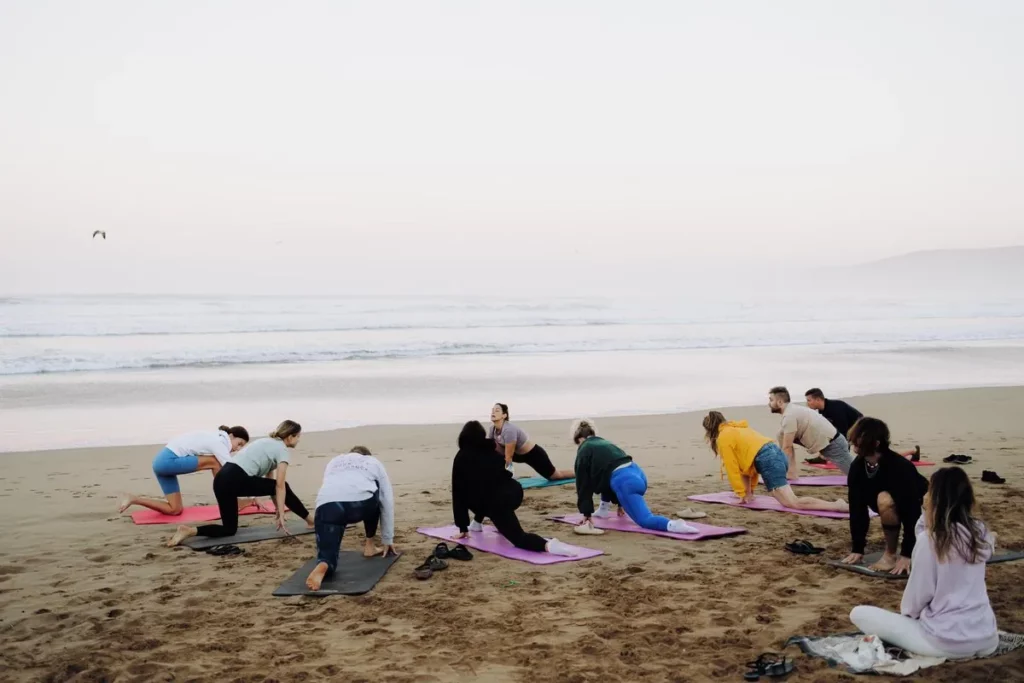
Surf camp guests doing yoga on the beach at sunrise in Taghazout Bay
Yoga on the beach at sunrise
2

Yoga and meditation

Surf and yoga together is a great way to enjoy an active holiday. Join classes with a qualified, experienced teacher at sunrise or sunset on our terrace, and sometimes on the beach. Private classes are available. Each session lasts 1 hour, and the number of sessions depends on your package.
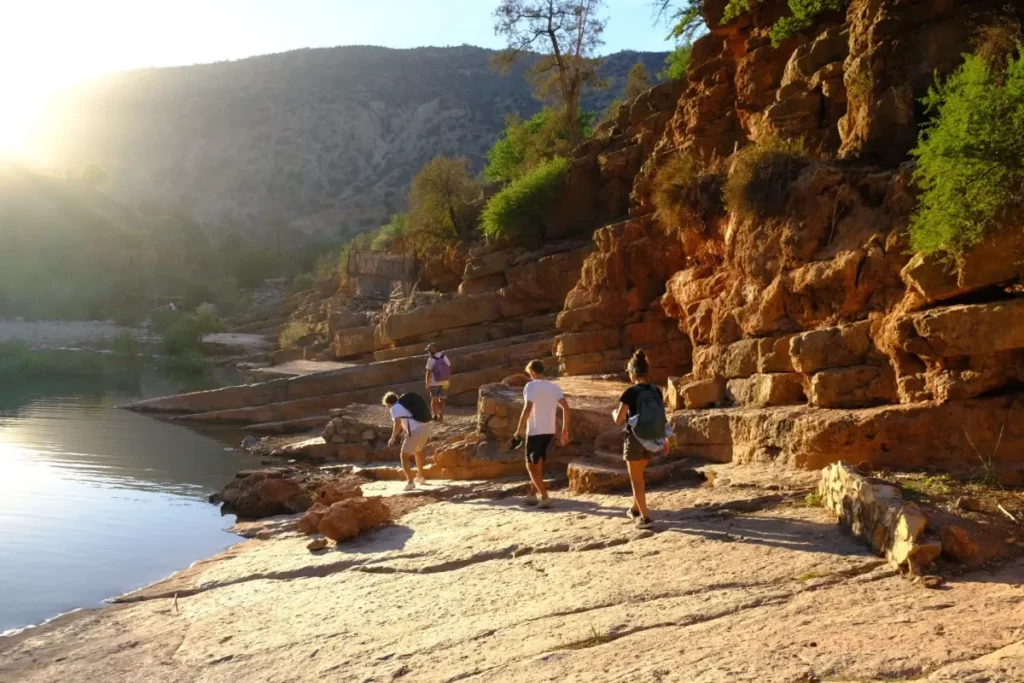
Visitors exploring the rocks and natural pools of Paradise Valley near Taghazout
Natural pools in Paradise Valley
3

Paradise Valley and the Argan Oil Village

Paradise Valley lies in the mountains between Agadir and Marrakech: a green valley with palm, juniper and almond trees, a river, and natural pools with turquoise water and small waterfalls. The trip includes a stop at an Argan Oil Village, and it is included in our Family and Premium packages.
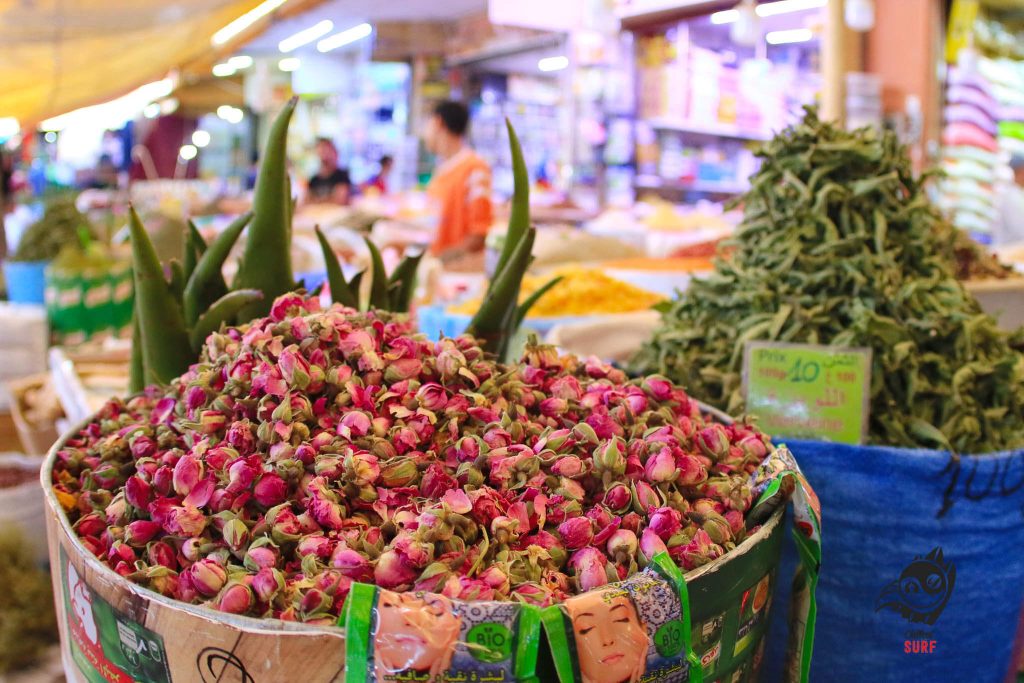
Agadir Souk Morocco
Souk El Had in Agadir
4

Agadir souk: one of the largest in the world

In Agadir, about 30 minutes from Taghazout, Souk El Had is the largest indoor market in North Africa. Drink freshly squeezed orange juice for 10 MAD (about 1 euro), bargain for argan oil and carpets, or buy souvenirs. Agadir also has a clean seafront promenade for a long walk. The visit is included in our Family and Premium packages.
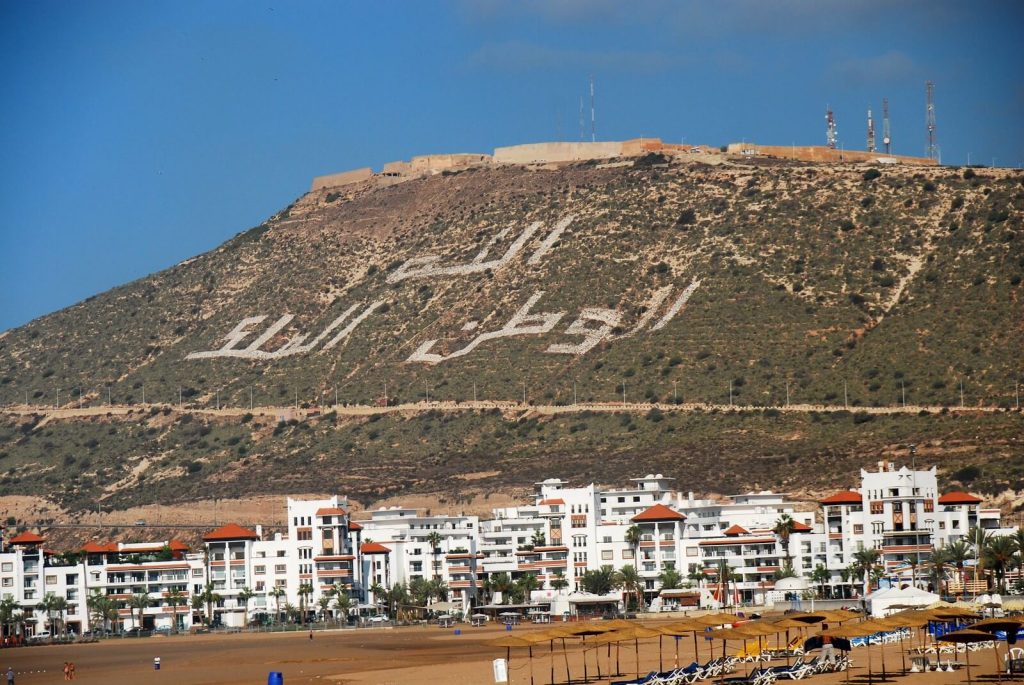
Agadir OuFella Mountain
The hill of Agadir Oufella
5

Agadir Oufella, the old Kasbah

In 1960 a major earthquake hit Agadir and most of its old buildings were destroyed. The oldest building that remains is the Kasbah of Agadir Oufella. Large parts are in ruins, but it is a good stop between Taghazout and Agadir, with a panoramic view over the city and the beach.
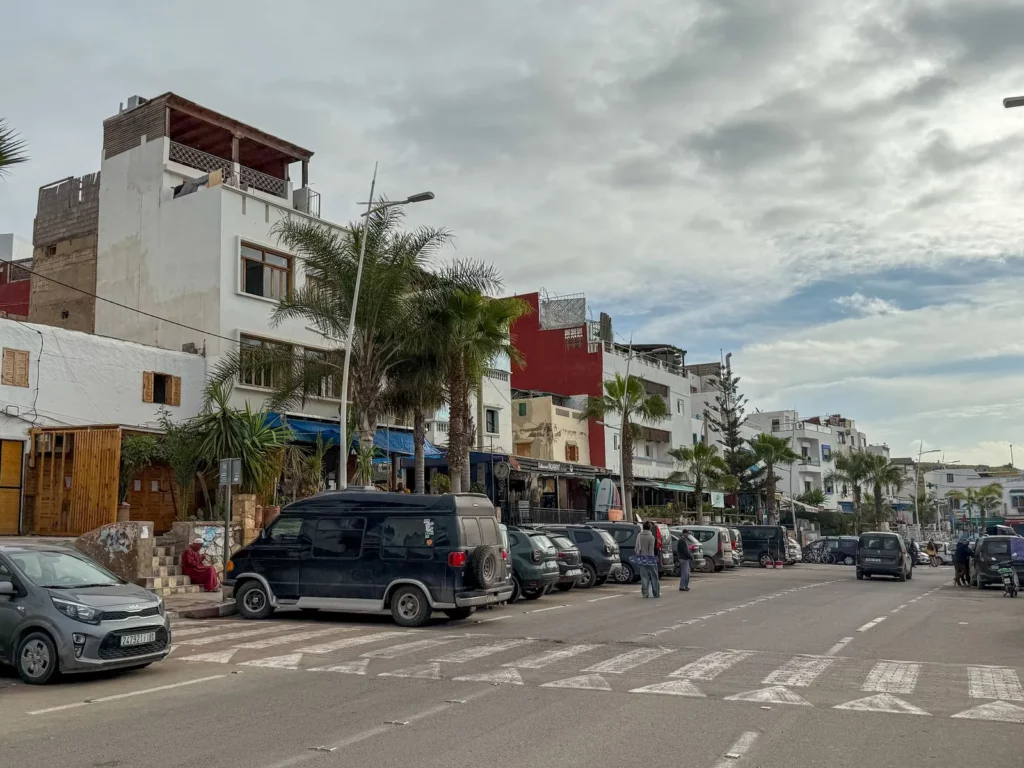
The main street of Taghazout village with colourful houses and palm trees, Morocco
The main street of Taghazout
6

Explore Taghazout and Tamraght

There are no street names in Taghazout and Tamraght, so it is easy to lose your way, but just as easy to find it again, because nothing is more than a 5-minute walk away. The alleys are a little worn, but the small blue houses are charming and make the walk interesting.
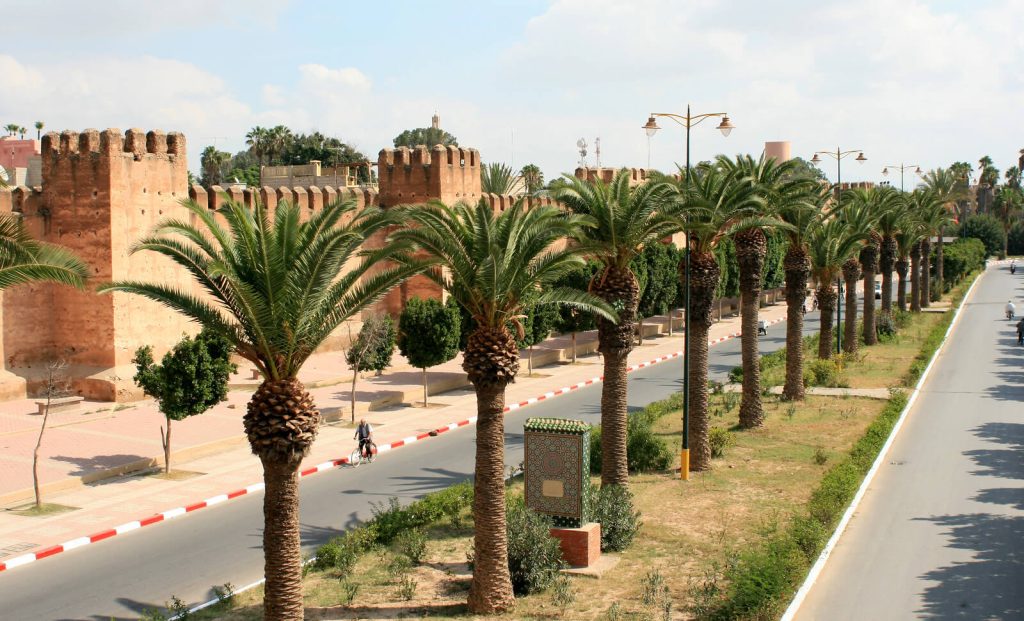
The Walls of Taroudant
The walls of Taroudant
7

Visit Taroudant

To feel the real colours of Taroudant, take a ride in a horse-drawn carriage, called a caleche. The town sits in the fertile Souss valley, with views of the Upper Atlas, and an old kasbah there has been turned into a high-end restaurant. Nearby, the pretty village of Amagour is surrounded by argan trees.
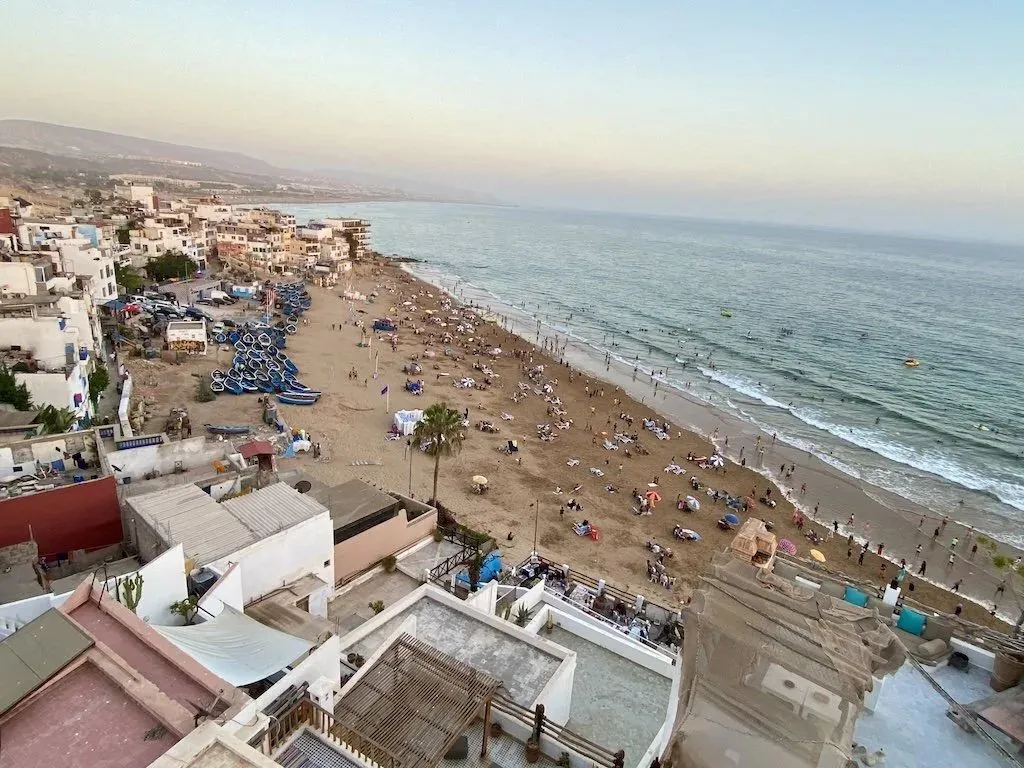
Aerial view of Taghazout village and its beach full of surfers and fishing boats
Taghazout beach with its fishing boats
8

Eat fresh fish

If you like seafood, you are in the right place. Walk north along the beach to Surf It, a place where locals eat, and sit by the water for some of the best seafood in Taghazout Bay. Everything is fresh, and the sardines (espetos) are especially good.
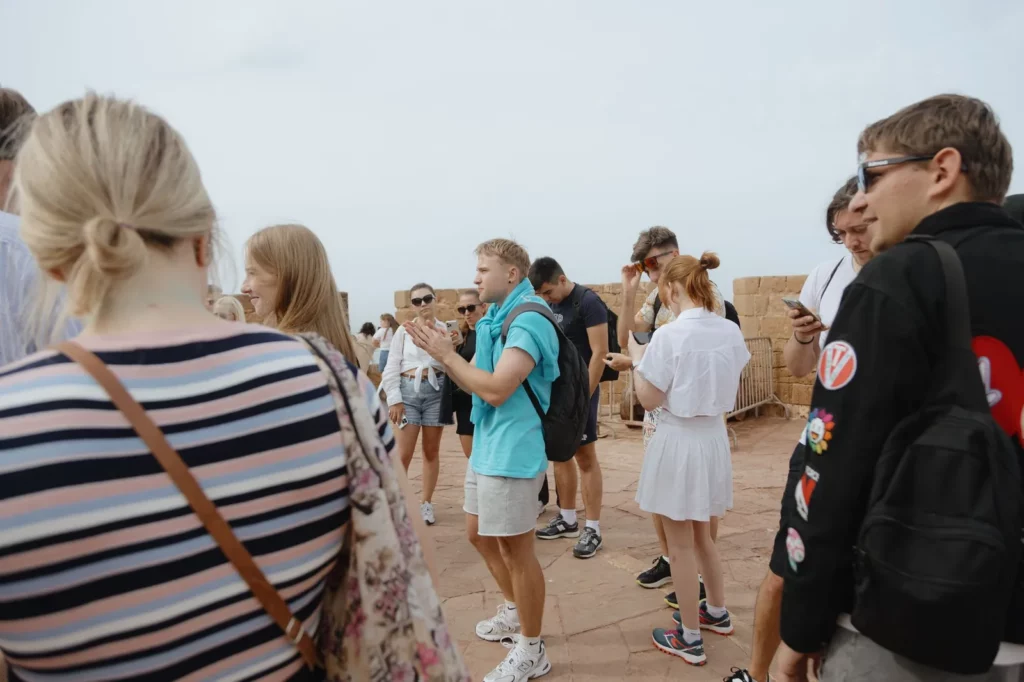
Group of travellers on the ramparts of Essaouira on a day trip from Taghazout
On the ramparts of Essaouira
9

Essaouira on a day trip

Essaouira is about 3 hours north of Agadir along the west coast: a small coastal city known for its seafood, its Gnaoua music and a beautiful medina. You can try kitesurfing, enjoy the beaches, ride camels and horses, browse the souk and eat in great restaurants. We organise this trip on days when the surf is flat.
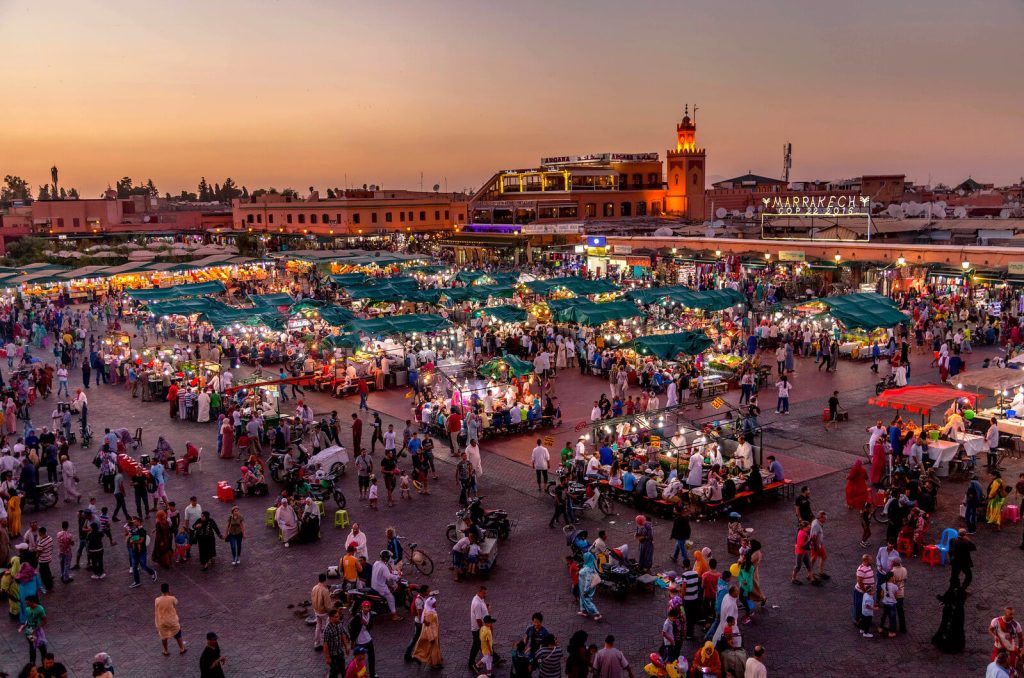
Marrakech Jemaa El Fna
Jemaa El Fna in Marrakech
10

Marrakech on a day trip

Marrakech is about 3 hours inland from Agadir by road, which makes it a full-day trip. The medina is a great place to explore, shop or try your hand at bargaining, with historic sites, museums and gardens. Sit down at a local cafe for a strong coffee and enjoy the energy of the city.

Plan your trip

Plan your flat day

Pick by how much time you have.

Time you haveGood optionsDistance
A few hoursYoga, a walk through Taghazout and Tamraght, fresh fish on the beachOn your doorstep
Half a dayAgadir souk and promenade, Agadir Oufella, Paradise ValleyAbout 30 minutes away (the souk)
A full dayEssaouira, Marrakech or TaroudantAbout 3 hours by road to Essaouira and Marrakech

Need help getting around? Read how to get to Taghazout or see our surf camp packages.

Digital nomads

Working remotely from Taghazout Bay

Taghazout Bay has a high-speed fibre network, so you can work from your laptop and combine work and travel. You can also buy a prepaid Moroccan SIM card for local calls and 4G internet.

Good to know

Things to do in Taghazout: questions and answers

What can I do in Taghazout when the surf is flat?

Take a day trip to Essaouira, Marrakech, Taroudant or Paradise Valley, visit the Agadir souk and the old Kasbah, join a yoga class, or walk through the villages and eat fresh fish. We organise day trips on flat days.

How far is Agadir from Taghazout?

The Souk El Had in Agadir is about 30 minutes from Taghazout.

Can I visit Marrakech or Essaouira in one day?

Yes. Both are about 3 hours by road from Agadir, so they work well as full-day trips.

Can I work remotely in Taghazout?

Yes. Taghazout Bay has a high-speed fibre network, and you can add a prepaid Moroccan SIM card for 4G internet.

Ready for your Taghazout trip?

Pick a package with lessons, meals and accommodation, or send us your dates and questions and we will help you choose.
View surf camp packages Ask us a question

Best Surf Spots in Morocco: Where to Surf

The best surf spots in Morocco are on the Atlantic coast, which stretches for more than 2,000 km: powerful right-hand points and reefs for experts, a long mellow bay for longboarders and sandy beaches for beginners. Most surf trips go to Taghazout and Imsouane.

This guide to where to surf in Morocco covers the main spots, which level each one suits, when to go and where beginners should start. It was written by the team at ChillOut Surf Camp in Taghazout Bay, so the notes come from people who surf and teach on this coast.

  • Best seasonOctober to April
  • Biggest swellDecember to February
  • BeginnersTaghazout Bay and Imsouane
  • ExpertsKiller Point, Dracula, Safi
  • CoastMore than 2,000 km of Atlantic
  • AirportAgadir Al Massira (AGA)

Surf spots in Morocco

The best surf spots in Morocco at a glance

Morocco has hundreds of waves, but a handful of spots draw most surfers. Use this table to compare them, then read the details below.

SpotAreaWaveLevelBest time
Taghazout BayNorth of AgadirMore than 20 spots: points, reefs and beach breaksAll levelsOctober to April, beginners all year
ImsouaneNorth of AgadirVery long, mellow right (the Bay) and a hollow reefBeginner to intermediate in the BayWinter swell
Anchor PointTaghazoutRight-hand point break over rockIntermediate to expertWinter swell
Killer PointTaghazoutBig right with a long tube over reefExperiencedClean swell
DraculaTaghazoutHollow, powerful rightExperiencedMay to October
SafiSafiHeavy right-hander with long tubesExperts onlyLarge winter swells
MehdiaNorth of RabatHollow beach break by an estuaryConfident surfersHigh tide, especially summer
Sidi KaoukiSouth of EssaouiraPowerful shore break with a strong currentExperiencedAsk locals before you go

Conditions change with the swell, tide and wind. Always check a live forecast and ask locals or your instructor before you paddle out.

Surf spot in Morocco

Taghazout Bay

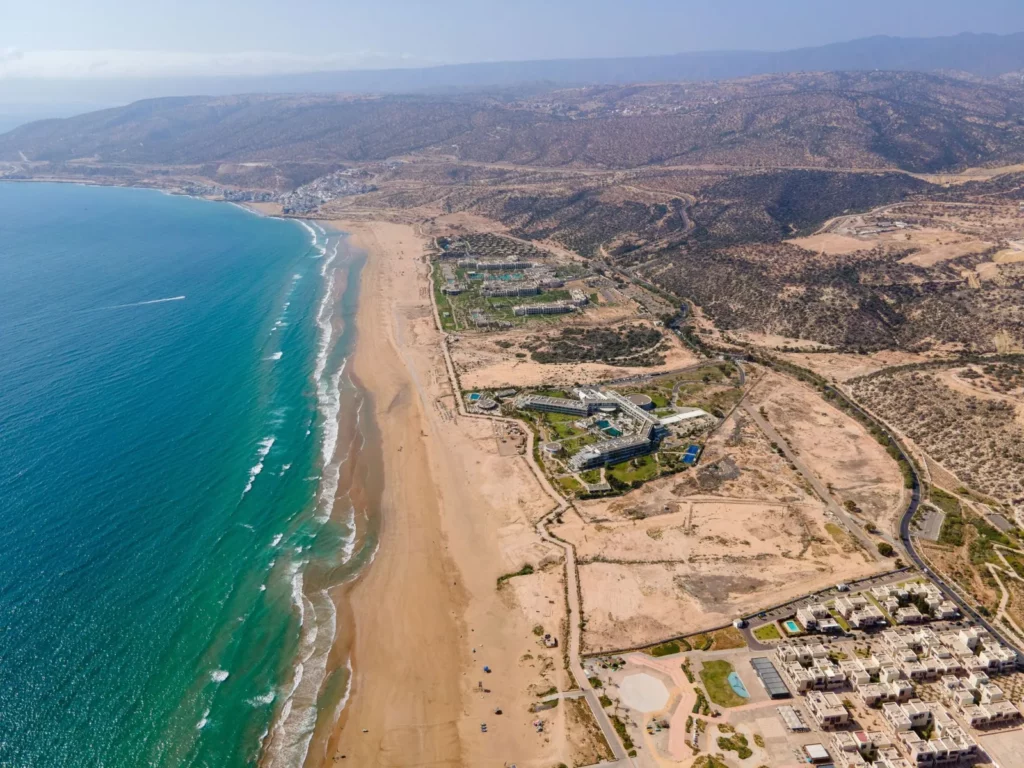
Taghazout Bay, about 40 km north of Agadir, has more than 20 surf spots along a short stretch of coast. You find right-hand points, reefs and long sandy beaches, so it suits every level, from a first lesson to a heavy reef session.

It also has hotels, hostels and surf camps in Taghazout and Tamraght, plenty of surf schools and easy transfers from Agadir airport. Read our complete guide to surfing in Taghazout for every spot, or Tamraght vs Taghazout to choose where to stay.

  • LevelAll levels
  • Best seasonOctober to April
  • AirportAbout 30 to 45 minutes
Aerial view of the long sandy beach and coastline of Taghazout Bay, Morocco
The long sandy coastline of Taghazout Bay

Surf spot in Morocco

Imsouane

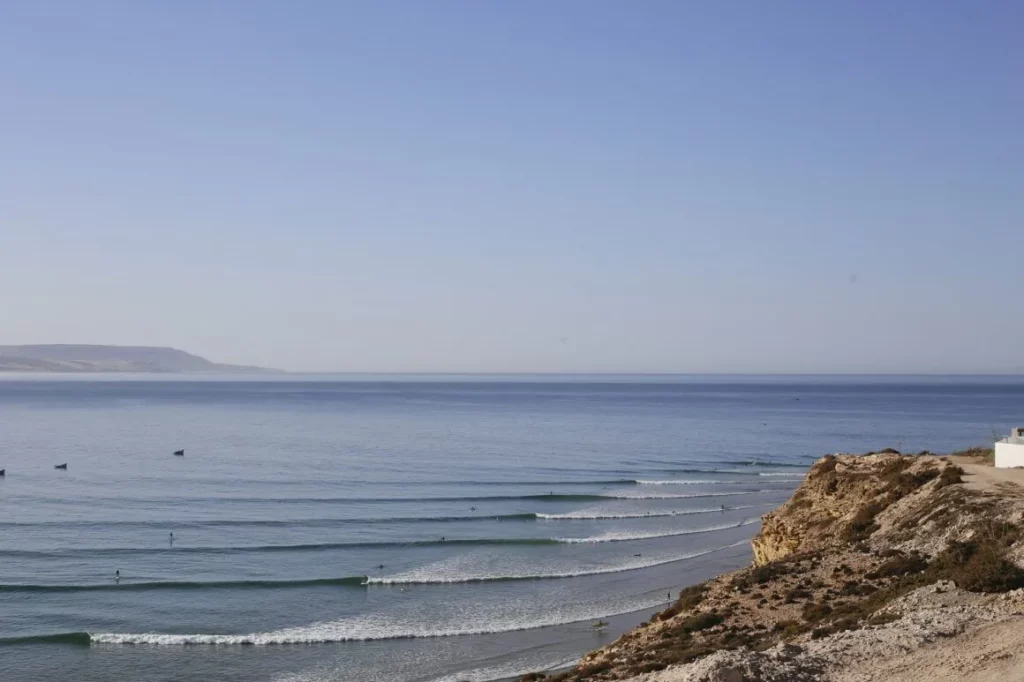
Imsouane is about 100 km north of Agadir and is a favourite with beginners, improvers and longboarders. It has two main spots. The Bay is one of the longest and most forgiving waves in Morocco: a flat, mellow wave of more than 800 metres. The Reef is hollow and powerful in winter and only for experienced surfers.

Not sure whether to base yourself here or in Taghazout? Read Imsouane vs Taghazout.

  • BayLong, mellow right
  • ReefHollow, experienced only
  • DistanceAbout 100 km north of Agadir
Lines of swell rolling into La Baie in Imsouane seen from the cliff
Lines of swell rolling into La Baie in Imsouane

Surf spots in Morocco

Anchor Point and Killer Point

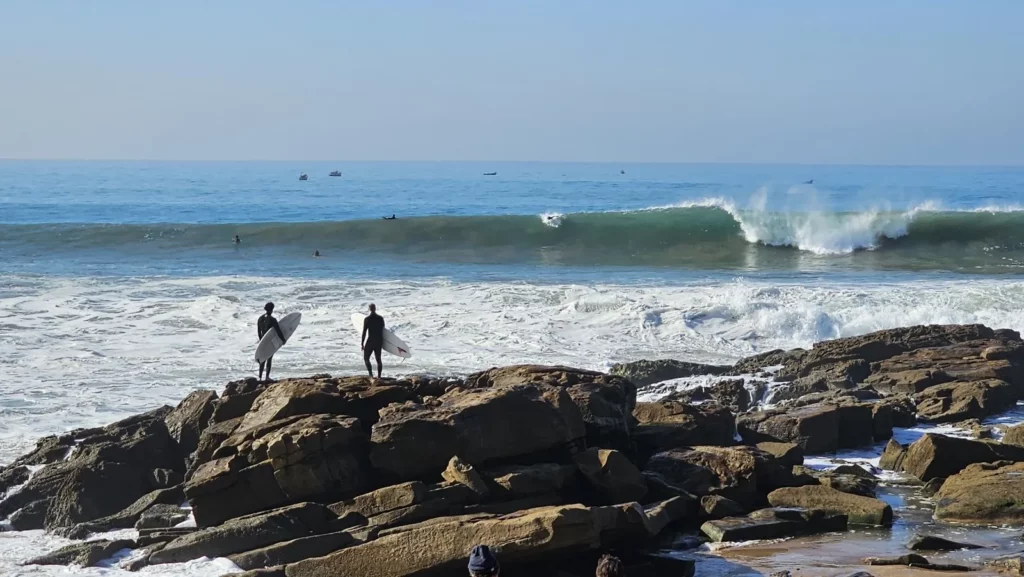
Anchor Point is the most famous wave in Morocco, a right-hand point break near Taghazout. It was named after old anchors that dragged on the rocks near a fish-packing plant. The wave peels for 200 to 300 metres over rock, with a nice tube section at the start. Today it is busy, with several surf schools in the water, but it is still an amazing wave.

A little further north is Killer Point, a big right with a big tube and fewer people in the water. Both waves break over rock and need an experienced level.

  • Anchor PointIntermediate to expert
  • Killer PointExperienced
  • BottomRock and reef
Two surfers on the rocks at Anchor Point as a long right-hand wave breaks, Taghazout, Morocco
Surfers on the rocks watching Anchor Point break

Surf spots in Morocco

Dracula, Safi, Mehdia and Sidi Kaouki

These four spots are further from the usual surf-camp routes. Most are for experienced surfers, so read the notes before you go.

Dracula

A less crowded spot just outside Taghazout. It takes its name from the tooth-shaped rocks under the water, and sea urchins live there too. It is a hollow, powerful right of great beauty, but it is dangerous and needs a confirmed level.

  • LevelExperienced
  • Best timeMay to October

Safi

The Moroccan wave that surfers dream about. A long, heavy right at the bottom of a cliff that only works on large swells and gives tubes that can last more than 15 seconds. There can be strong currents at ebb tide.

  • LevelExperts in good shape
  • Best timeLarge winter swells

Mehdia

A beach break about 30 km north of Rabat, on the edge of an estuary. The wave is hollow and quite intense at high tide, especially in summer. It tubes on the right, with openings on the left.

  • LevelConfident surfers
  • Best timeHigh tide, summer

Sidi Kaouki

A small village south of Essaouira. The main beach has a powerful shore break and a strong current, so it is not a good choice for beginners. Better waves are a few hundred metres to the north, but they are harder to reach.

  • LevelExperienced
  • WavePowerful shore break

Plan your trip

Which Morocco surf spot for which level

Pick a spot that matches your skills and the conditions of the day.

Beginner

You are learning to stand up or you ride whitewater. Choose a sandy beach, surf with an instructor on a soft-top board and pick small days.

Good spots: Taghazout Bay beaches, Imsouane Bay

Intermediate

You catch green waves, turn both ways and can paddle back out through the break. Choose your tide and swell carefully and avoid the busiest peaks.

Good spots: Imsouane Bay, Anchor Point on moderate days

Advanced and expert

You are comfortable on rock, in current and in powerful surf. Go in winter, check the forecast daily and never surf the big spots alone.

Good spots: Killer Point, Dracula, Safi, Imsouane Reef

Travel info

Morocco surf season

Beginners and improving surfers find waves all year round, almost anywhere on the west coast. The high season for good surfers is October to April. December, January and February are the peak of the swell, and the Atlantic can send waves up to 5 metres.

The north-west facing coast around Casablanca and Rabat gets more swell than the south-west facing points around Agadir. Summer is smaller and gentler, which suits beginners and longboarders.

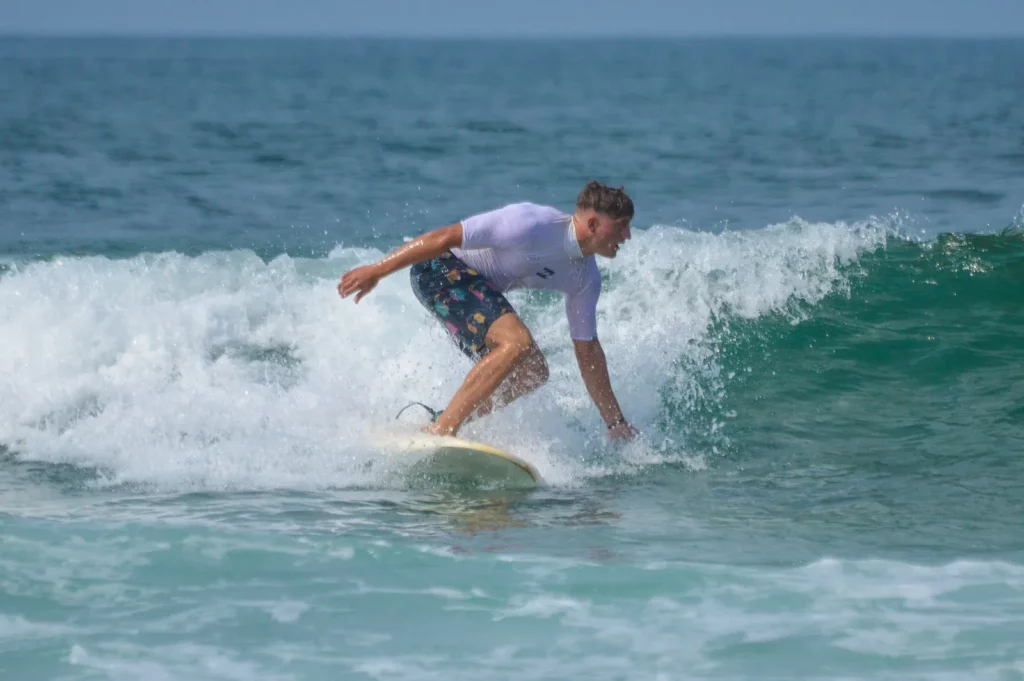
Surf student riding a wave during a lesson in Taghazout Bay, Morocco
A student riding a wave during a surf lesson in Taghazout Bay
PeriodSwellCrowdsWater
October to NovemberBuilding, consistent groundswellModerateAbout 20 to 22 degrees
December to FebruaryPeak size and consistencyBusiestAbout 17 to 19 degrees
March to AprilStill reliable, tapering offModerateAbout 18 to 20 degrees
May to SeptemberSmaller and less consistentQuietestAbout 19 to 22 degrees

New to surfing?

Where beginners should learn in Morocco

For a first surf trip, Taghazout is the easiest choice. It has beginner-friendly beaches, instructors for every level, and good food and places to stay. Don't paddle out alone: a qualified instructor chooses the right spot for the day.

At ChillOut Surf Camp in Taghazout, lessons are in small groups of 6 students per instructor, 2 hours a day, and all levels are welcome. See our surf lessons in Taghazout, the surf camp packages, or read how to get to Taghazout.

Good to know

Frequently asked questions

Where is the best place to surf in Morocco?

Taghazout Bay has the most variety, from beginner beaches to famous points like Anchor Point. Imsouane is known for one of the longest and most forgiving waves in Morocco, and Safi is the choice for experts who want heavy tubes.

When is the best time to surf in Morocco?

The high season is October to April, with the biggest swell from December to February. Beginners find small, friendly waves all year, and summer is the quietest time.

Is Morocco good for beginner surfers?

Yes. The sandy beaches around Taghazout Bay and the Bay at Imsouane have gentle waves, and there are many surf schools. A lesson with a qualified instructor is the safest way to start.

Which Moroccan surf spots are for experts only?

Killer Point, Dracula, Safi and the Reef at Imsouane break over rock and can be powerful and dangerous. They need experience and a good level of fitness.

What wetsuit do I need to surf in Morocco?

A 3/2 mm wetsuit covers most of the season. Add a 4/3 mm or a hooded vest for December to February. Most camps rent boards and wetsuits.

Ready to surf in Morocco?

Pick a package with lessons, meals and accommodation, or send us your dates and questions and we will help you choose.
View surf camp packages Ask us a question

What Does Surfing Mean? Surfing Terms & Dictionary

What Does Surfing Mean?

These are Surfing Terms, Definitions, Slang and other words currently stored in our Surfing Dictionary. If you know any surfing terms that are not mentioned in this list then go ahead and suggest a word for our dictionary.

There are 81 Surfing Terms in our Surfing Dictionary:

Surfboards

  1. AXED
    This term refers to a surfer when hit by the lip of a wave which leads to a wipeout.
  2. BACKHAND
    This means to surf with your back to the wave.
  3. BACKSIDE
    When riding a wave, facing the beach with your back to the wave.
  4. BANK
    The bank is the sandbank on which waves break.
  5. BARREL
    The "tube" of a wave, the ultimate ride in surfing, to enter the wave itself as it breaks over you, and successfully exiting.
  6. BEACH BREAK
    Beach Break refers to surf breaking on a sandy beach.
  7. BLADE
    Another word for your surfboard.
  8. BLANK
    A blank is a block of foam from which a custom surfboard is made.
  9. BLOWN OUT
    This is a term used to refer to choppy surf resulting from onshore winds.
  10. BODYBOARDING
    Bodyboarding is surfing while lying down on a bodyboard instead of standing up on a surfboard.
  11. BODYSURFING
    Bodysurfing is surfing without the benefit of anything except one's own body, with only the use of fins.
  12. BOMBORA
    A bombora is a deep water, offshore reef break.
  13. BONEYARD
    The impact zone, the place you don't want to be when your sneaker set comes!
  14. BOTTOM TURN
    This refers to a turn at the bottom of the wave face.
  15. BREAK
    A place where surfing is exceptionally good. It usually consists of a "peak" or long "peeling" lines of waves.
  16. CHANNEL
    A channel refers to a deep water gap between sandbanks or reefs.
  17. CHOPPY
    Choppy refers to the ocean under an onshore wind.
  18. CLEAN
    Clean refers to glassy, peeling waves and/or good surf conditions.
  19. CLEAN-UP
    A clean-up is when a large set catches everybody inside.
  20. CLOSE-OUT
    A close-out is a wave that breaks along its entire length simultaneously.
  21. CUTBACK
    This is a turn wherein you reverse your direction completely, right to left or left to right.
  22. DECK
    The deck is the upper surface of aboard.
  23. DING
    This refers to a dent or hole in surfboard.
  24. DOUBLE UP
    This is when one wave overtakes another.
  25. FACE
    This is smooth, unbroken portion of wave.
  26. FLOATER
    This refers to momentarily surfing on the outer, top portion of the lip before falling down and in front of the wave while it breaks and continues your ride.
  27. FOREHAND
    This term refers to surfing with your face to the wave.
  28. FRONTSIDE
    When riding a wave, facing the wave with your back to the beach.
  29. GLASSY
    This is to surf with either light offshore wind or no wind at all.
  30. GNARLY
    This term could mean heavy, difficult waves which are usually quite big.
  31. GROMMET
    This term is used to describe a young and precocious surfer.
  32. GUN
    A gun is a big wave board which is long and narrow in shape.
  33. HANG 10
    Positioning yourself so that all your toes are draped over the nose of the board as you glide down the wave. There's no such thing as a "cheater ten," you can't fake hanging ten.
  34. HANG FIVE / CHEATER FIVE
    Draping five toes over the nose of the board. A "cheater five" is where a surfer is actually placing the majority of his or her weight on the back foot, and simply sticking the forward foot out as far as it can go.
  35. IMPACT ZONE
    This is the point at which a swell is breaking most heavily and most frequently.
  36. KICK-OUT
    This is done by making a controlled exit from a wave by riding up and face and over the top.
  37. KOOK
    A wannabe surfer, someone who talks about great waves he or she catches, but no one ever sees them. A surfer of limited experience who is in the habit of constantly being in the wrong place at the wrong time, often ruining an experienced surfer's ride.
  38. LIFT
    These are forces generated on surfboard that holds you up.
  39. LINED-UP
    This term is used to describe an even, well-developed swell.
  40. LINEUP
    The area where surfers congregate, waiting for waves. Originally, people paddled out and waited for their turn to take a wave, hence the term. No one waits in a lineup anymore, but term is still used. First come, first served.
  41. LIP
    The part of the wave that pitches forth from the crest.
  42. LULL
    This is a period of time wherein waves either quit coming altogether or arrive at a much-reduced size.
  43. MUSH
    These are waves that break softly or sloppily with little power.
  44. OFF THE LIP
    Maneuvering your board using the "lip" of the wave.
  45. OFFSHORE
    When prevailing winds are blowing from land to sea. This usually helps wave stand up, making it more hollow.
  46. OUTSIDE/OUT THE BACK
    This is area beyond the impact zone.
  47. OVERHEAD
    These are waves that exceed the height of rider.
  48. PEAK
    This is a point at which a wave breaks first, from which it ideally peels in one or both directions.
  49. PEEL OFF
    This is a process whereby a wave breaks starting off in one particular place and then zippering along cleanly and evenly for a distance.
  50. PET THE CAT
    When trying to enter the tube, it sometimes becomes necessary for a surfer to slow down. One technique is to "Pet the Cat". A surfer is petting the cat when he places his hand in the face of the wave, dragging it through the water. This can control the speed of rider so that they can slow themselves into the tube, or release enough to get out of the tube.
  51. POCKET
    This is the steepest and most powerful part of wave.
  52. POINT BREAK
    An area jutting into the sea which causes waves to break either right or left on either side of point.
  53. PUMPING
    This term is used to describe a good, powerful swell.
  54. RASHGUARD/RASHIE
    Slick material used either under a wetsuit or by itself. Protects skin from, obviously, rashes which can be caused by friction against wax or board itself.
  55. REEF BREAK
    This is a surf spot where waves encounter a distinctively contoured reef, causing them to break with distinctively good shape.
  56. RIP
    This refers to a channel of water running out to sea.
  57. ROGUE
    A wave that is decidedly larger than most of the other waves you are experiencing during a particular session.
  58. ROGUE WAVE
    An outside wave that "comes out of nowhere". Usually larger than most of the other waves you will see in that session.
  59. SANDBAR
    This is one feature of ocean bottom which has a great effect on shape of waves. Sandbars get moved around by larger waves, one day a peak breaks here - next day, it can be gone. Sandbars are usually found at beach breaks and river mouths.
  60. SET
    This refers to a group of waves.
  61. SIDE BITES
    These are smaller, outside fins in a three-fin setup.
  62. SKEG
    This is Archaic term for surfboard fin.
  63. SLIDE HANGER
    An open-ended, wetsuit hanger designed to slide into position at the waist of wetsuit. The wetsuit is draped over a circular I-beam bar
  64. SLOP
    This refers to lousy or weak surf.
  65. SNEAKER SET
    The set of waves that seems to come out of nowhere. This usually shows up just after everyone on the outside has gotten tired of waiting for the next outside set, and has paddled to the inside to catch a few. This is also known as "clean up" set.
  66. SOUP
    This term refers to white water of a broken wave.
  67. SPIN-OUT
    A Spin-out is when fins of board break loose from water surface.
  68. SPITTING A LIP
    When a wave throws out the uppermost portion of wave, creating a tube or barrel. Getting hit upside the head by a spitting lip can be painful. Exercise caution whenever a wave spits a lip.
  69. STOKED
    The state of near-Nirvana that accompanies a surf session. Has been known to cause those who are stoked to walk about with a zombie-like expression and a huge smile on their faces for days.
  70. SUCKY
    This refers to a hollow, often heavy wave.
  71. SURF NAZI
    Intolerant locals (generally, but you can find them anywhere) who feel they "own" the break and don't want you there. They are generally cowardly, insecure types and have been known to start fights with surfers who are smaller than they are.
  72. TAKE-OFF
    A Take-off is the start of ride.
  73. THE GREEN ROOM
    This refers to tube or barrel of a wave. This is also known as "The Green Cathedral".
  74. TRIM/TRIMMING
    This means riding board at an angle to wave, sidelong down length of beach, instead of aiming straight at beach as you ride.
  75. TUBE
    Tube refers to inside of a hollow wave.
  76. VICTORY AT SEA
    This refers to large, choppy surf.
  77. WAHINE
    A female surfer.
  78. WAX
    Surfboard wax is applied to deck of board to prevent slipping off while riding.
  79. WETSUIT/WETTIE
    The neoprene suit was worn by surfers during cooler times. Should fit snugly to allow just a bit of water to enter. The body heat warms water and helps keep surfer warmer in cool/cold water. Measured by thickness of neoprene ie; 4/3, 3/2, etc. The numbers designate thickness of neoprene.
  80. WIPEOUT
    This means to fall off, or get knocked off, your surfboard.

Tamraght vs Taghazout 2026: Which One Is Better for Your Surf Trip?

Tamraght vs Taghazout: both villages sit on the same stretch of Moroccan coast, only a short taxi ride apart, but they feel very different. Tamraght is quieter and closer to the soft beach breaks. Taghazout is the busiest base, next to the famous points.

This 2026 guide compares Tamraght and Taghazout for surfing, atmosphere, prices and getting around, so you can pick the right base for your trip. It was written by the team at ChillOut Surf Camp in Taghazout Bay.

  • Distance apart10 to 15 minute taxi ride
  • BeginnersTamraght beaches
  • Famous pointsTaghazout
  • Airport30 to 45 minutes to Taghazout
  • Best seasonOctober to April
  • Wetsuit3/2 mm, 4/3 mm in winter

Quick answer

Tamraght or Taghazout: which one should you choose?

The short version, in two lists. You do not have to choose one forever: the villages are only a 10 to 15 minute taxi ride apart, so you can stay in one and surf in the other.

Choose Tamraght if you want

  • a quieter, more local village
  • soft, sandy beach breaks close by, ideal for beginners and improvers
  • more room in the water on the long beaches
  • a base for a longer stay, yoga and slower days

Choose Taghazout if you want

  • the busiest base, with the most restaurants, cafes and surf camps
  • the closest access to the famous right-hand points
  • a social, lively atmosphere with everything within walking distance
  • variety: beginner waves and expert waves in one place

Compared

Tamraght vs Taghazout at a glance

TamraghtTaghazout
AtmosphereQuieter and more localBusiest base, lively
Best forBeginners, improvers and longer staysFirst-timers who want everything close, and experienced surfers
Main wavesSandy beach breaks such as Devil's Rock and CrocroRight-hand points such as Anchor Point, Hash Point and Panoramas
Crowds in the waterMore room on the long beachesBusier, especially at the famous points in peak season
Food and cafesFewer, more localThe most restaurants and cafes
Stay optionsGuesthouses and longer-stay and yoga-focused staysThe most surf camps, plus guesthouses and villas
Distance between themA 10 to 15 minute taxi rideA 10 to 15 minute taxi ride

Surf spots

Surf spots: Tamraght vs Taghazout

South of Taghazout, around Tamraght and Aourir, the coast opens into long sandy beaches. Taghazout is built around variety, next to some of the most famous waves in Morocco. See all of them in our complete guide to surfing in Taghazout.

Surfer riding a wave at Devil's Rock beach in Tamraght with a surfboard in the foreground
Devil's Rock beach in Tamraght

Surfing in Tamraght

The waves are softer, the bottom is mostly sand and there is more room in the water, which is why most surf lessons happen here.

  • Devil's Rock: a sandy beach break that breaks low and slowly, forgiving for beginners and good for improvers working on turns
  • Crocro (Crocodile Beach): an open beach with plenty of white water and gentle green waves, a classic for first lessons
  • Banana Point, near Aourir: a relaxed right-hand point that works on most tides, popular with longboarders and intermediates
Two surfers on the rocks at Anchor Point as a long right-hand wave breaks, Taghazout, Morocco
Anchor Point, Taghazout

Surfing in Taghazout

Mostly right-handers that work best on a northwest swell, right next to the village.

  • Anchor Point: the best-known wave in Morocco, a right-hand point break over a rock shelf for intermediate to expert surfers
  • Hash Point: a soft right-hand point next to the village, friendly on small days for beginners who already surf green waves
  • Panoramas: a quality wave right beside the village, one of the easiest to reach on foot

Living there

Which is better for beginners, and where to stay

Beginners. For first lessons, the beaches around Tamraght are the better choice: soft waves, a sandy bottom and space to practise. You can also learn while staying in Taghazout, because surf schools drive students to these beaches anyway. The famous points are better once you ride green waves and are comfortable with rocks and a longer paddle.

Atmosphere. Taghazout is the busiest of the villages, with the most cafes, restaurants and surf camps, so there is always somewhere to eat, meet other surfers and plan your day. Tamraght is quieter and more local, popular with guests who stay longer and with yoga-focused stays.

Cost. Both villages have surf camps and guesthouses. A simple guesthouse costs about €15 to €30 per night with the room only, while a surf camp week with lessons, meals and equipment usually costs €400 to €900, depending on the season and the package. Always check what is included before you compare prices. See where to stay in Taghazout.

Getting around. Taghazout, Tamraght and neighbouring Aourir are all within a 10 to 15 minute taxi ride of each other. From Agadir airport, Taghazout is about 30 to 45 minutes by transfer or taxi (how to get to Taghazout). Aourir, also called Banana Village, is a working town a little further south with a beginner-friendly beach break and a more local feel. Agadir is a big city with more shops but less surf culture.

Travel info

Best time to surf in Tamraght and Taghazout in 2026

The surf season runs from October to April, with the biggest swell from December to February. From May to September the waves are smaller, which suits pure beginners. A 3/2 mm wetsuit covers most of the season, and a 4/3 mm is worth it from December to February.

PeriodWater temperature
October to NovemberAbout 20 to 22 degrees
December to FebruaryAbout 17 to 19 degrees
March to AprilAbout 18 to 20 degrees
May to SeptemberSmaller waves, best for pure beginners

Our verdict

So, Tamraght or Taghazout?

If you are learning to surf and want it quiet, base yourself near Tamraght. If you want the most going on and the famous waves on your doorstep, base yourself in Taghazout.

ChillOut Surf Camp is in Taghazout Bay, close to the waves described here, and our lessons use the soft sandy beaches around Tamraght for beginners. See our surf lessons in Taghazout and surf camp packages.

Good to know

Tamraght vs Taghazout: questions and answers

Is Tamraght or Taghazout better?

It depends on what you want. Tamraght is quieter and closer to the soft beach breaks, so it suits beginners and longer stays. Taghazout is the busiest base with the most restaurants, cafes and surf camps and the closest access to the famous points.

Is Tamraght or Taghazout better for beginners?

The beaches around Tamraght are better for first lessons, because the waves are softer and the bottom is sand. You can still stay in Taghazout, since most lessons take place on these beaches anyway.

What is the difference between Tamraght and Taghazout?

The main difference is the atmosphere. Tamraght is quieter and more local, while Taghazout is busier, with more restaurants, cafes and surf camps and the famous right-hand points.

How far is Tamraght from Taghazout?

They are a 10 to 15 minute taxi ride apart.

What is there to do in Tamraght?

Surf the sandy beaches such as Devil's Rock and Crocro, join a yoga class, walk through the village, or take a day trip to Agadir or Paradise Valley.

What is Devil's Rock?

Devil's Rock is a sandy beach break near Tamraght with low, slow waves. It is forgiving for beginners and a good place for improvers to work on their turns.

When is the best time to surf in Tamraght and Taghazout?

The surf season runs from October to April, with the biggest swell from December to February. From May to September the waves are smaller, which suits pure beginners.

Ready for your surf trip?

Pick a package with lessons, meals and accommodation, or send us your dates and questions and we will help you choose.
View surf camp packages Ask us a question