 English
  German
  Spanish
  French
  Italian
  Norwegian
  Swedish
  Danish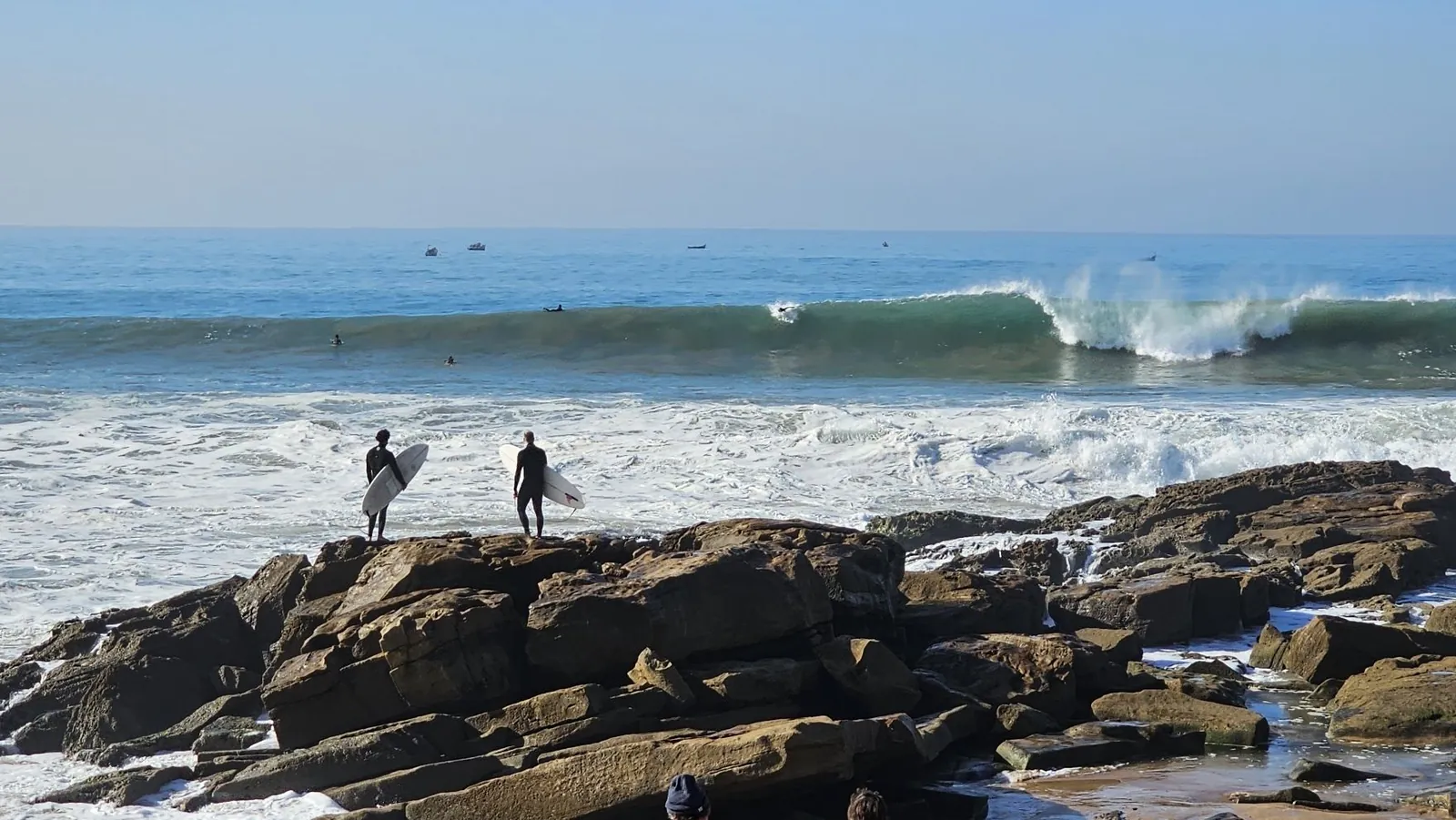
Surfing in Taghazout: The Complete Guide to Spots, Season and Where to Stay
Surfing in Taghazout means a wave for almost every level: powerful right-hand points for experts, mellow sandy beaches for beginners and a surf season that lasts around six months of the year. This former fishing village, about 20 km north of Agadir, is the heart of Moroccan surfing.
This guide to surfing in Taghazout covers every spot around the village, which ones suit your level, when to come, what to wear and what to watch out for. It was written by the team at ChillOut Surf Camp, who run a surf camp in Taghazout Bay and know this coastline well, so you also get honest notes on what the spots are like on an ordinary day, not only on the best day of the year.
- Best seasonOctober to March
- Water temperature16 to 24 degrees Celsius
- Wetsuit3/2 or 4/3 in winter, shorty in summer
- WavesRight-hand points, reefs and beach breaks
- LevelsBeginner to expert
- AirportAgadir Al Massira, about 30 to 40 minutes by car
Surf spots in Taghazout
The Taghazout surf spots at a glance
The coast around Taghazout is a string of rocky points, reefs and sandy beaches. Most waves are right-handers, and almost all of them work best on a northwest swell. Use this table to see what each spot offers, then read the details below.
| Spot | Wave | Level | Best conditions |
|---|---|---|---|
| Anchor Point | Right-hand point break over rock | Intermediate to expert | Northwest swell, low to mid tide |
| Killers | Very long right-hander | Advanced | Clean northwest swell |
| Mysteries | Fast right over reef | Intermediate to advanced | Mid to high tide |
| Boilers | Powerful, hollow reef break | Experts only | Medium to big swell |
| Hash Point | Mellow right-hand point | Beginner (small days) to intermediate | Small to medium swell, mid to high tide |
| Panoramas | Peaky point wave close to shore | Intermediate | Small to medium swell |
| Devil's Rock | Sandy beach break | Beginner to intermediate | Small to medium swell, most tides |
| Crocro | Open beach break | Beginner to improver | Small to medium swell |
| Banana Point | Right-hand point over sand and rock plates | Intermediate and longboarders | Most tides, small to medium swell |
Conditions change with the swell, the tide and the wind, so treat this table as a starting point and always check a live forecast and ask locals or your instructors before you paddle out.
Surf spot in Taghazout
Anchor Point
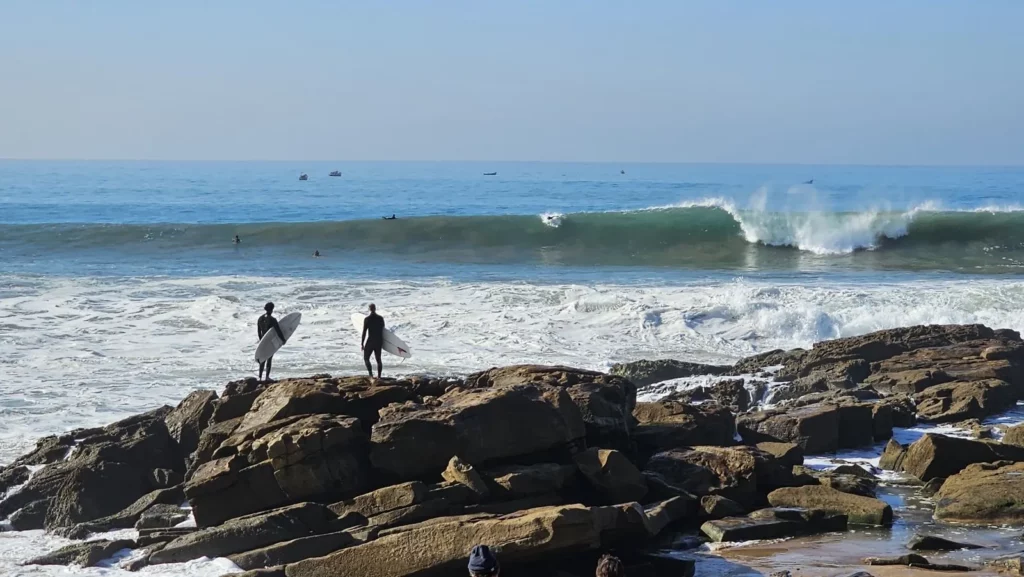
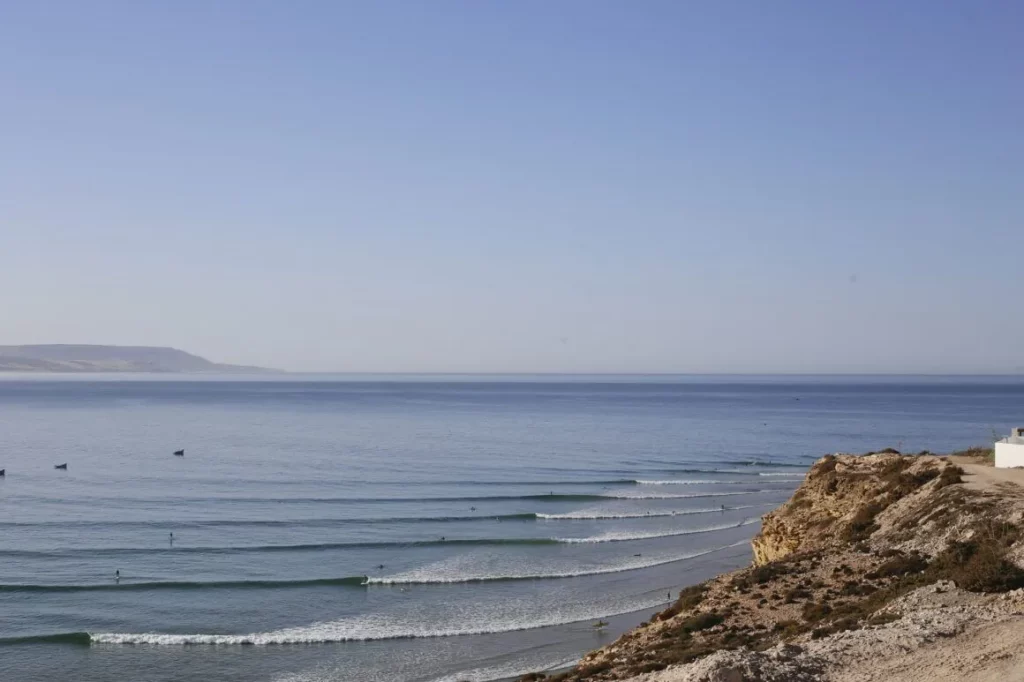
Surfing in Taghazout does not get more famous than Anchor Point, the best-known wave in Morocco: a right-hand point break that peels over a rock shelf, with fast sections, long walls and, on a good day, barrels. It works on a wide range of northwest swell and shows its full potential in winter.
Finding the wave is easy, because you can watch it from the cliff path above. Getting in is harder. You enter over rocks, there is a current along the point and the line-up is often crowded between December and February.
Our advice: watch for ten minutes before you decide. If you are not sure, you are probably better off at one of the gentler spots further down this guide.
Surf spots in Taghazout
Killers, Mysteries and Boilers: the northern spots
Surfing in Taghazout gets more serious north of the village, where the coastline is rockier. These three spots are for experienced surfers who are comfortable with reef, current and a longer paddle.
Killers
A very long right-hander on the northern part of the coast. On a clean swell it offers some of the longest rides in the area. Reaching it takes a walk down the cliff and a long paddle out, which keeps the crowd smaller, and it rewards advanced surfers who like power.
Mysteries
Just north of Anchor Point, Mysteries is a shorter, faster right over reef. It is less predictable than its famous neighbour and works best from mid to high tide. Expect a quicker take-off and a wave that changes shape quickly.
Boilers
About 20 minutes by car north of Anchor Point, Boilers is a powerful, hollow reef break over a shallow rock shelf. It demands respect, good fitness and the right equipment. If you are not sure whether you are ready for it, you are not.
Surf spots in Taghazout
Hash Point and Panoramas
Two waves sit right in and beside the village, which makes them the easiest to reach on foot. Hash Point, named after the hippies who gathered on this beach in the seventies, is a soft right-hand point. On small days it is a friendly place for beginners who already surf green waves, and on bigger days it is a fun wave for intermediates. It works best around mid to high tide.
Panoramas is the closest quality wave to the centre of Taghazout. The peak breaks fairly near the shore and can be crowded. In bigger swells there is a strong rip, so it suits intermediate surfers who are happy to read the water.
Open Hash Point on Google Maps Open Panoramas on Google Maps
Surf spots near Taghazout
Devil's Rock, Crocro and Banana Point: where most people learn
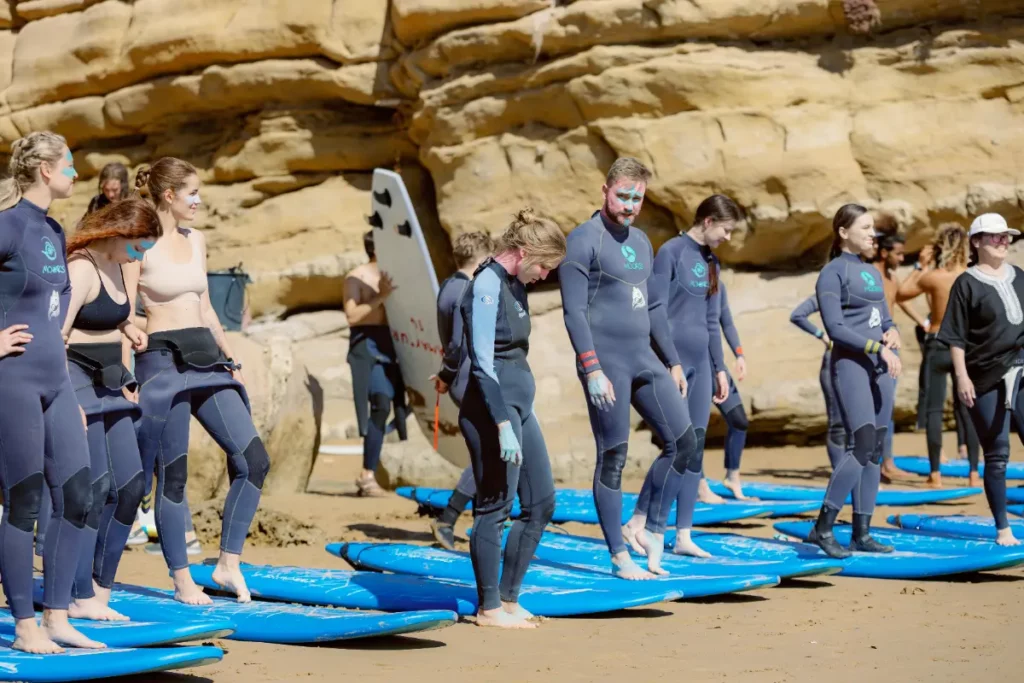
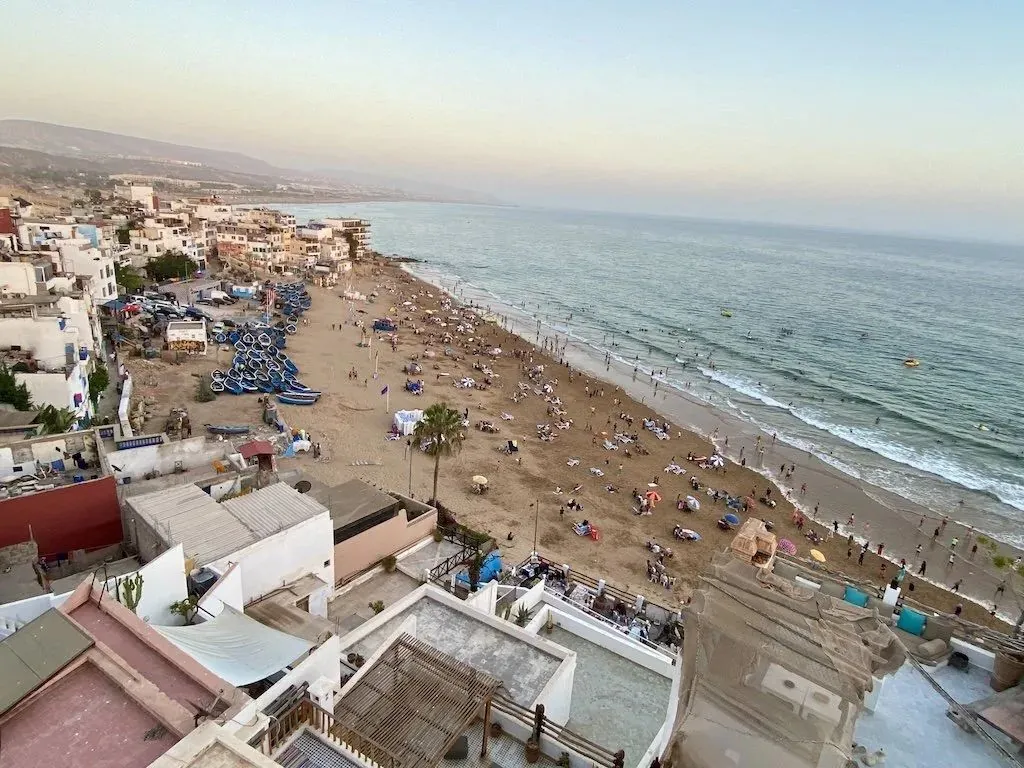
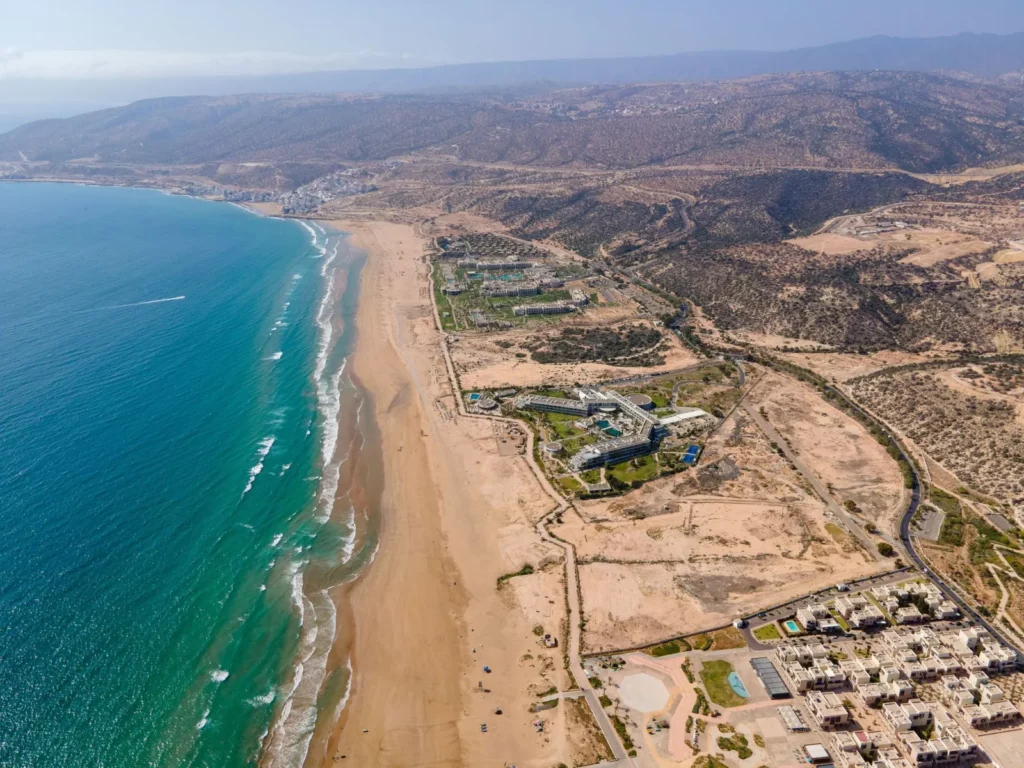
South of the village, around Tamraght and Aourir, the coast opens into long sandy beaches. Surfing in Taghazout for beginners happens here: most surf schools bring their students to these beaches, because the waves are softer, the bottom is mostly sand and there is more room in the water.
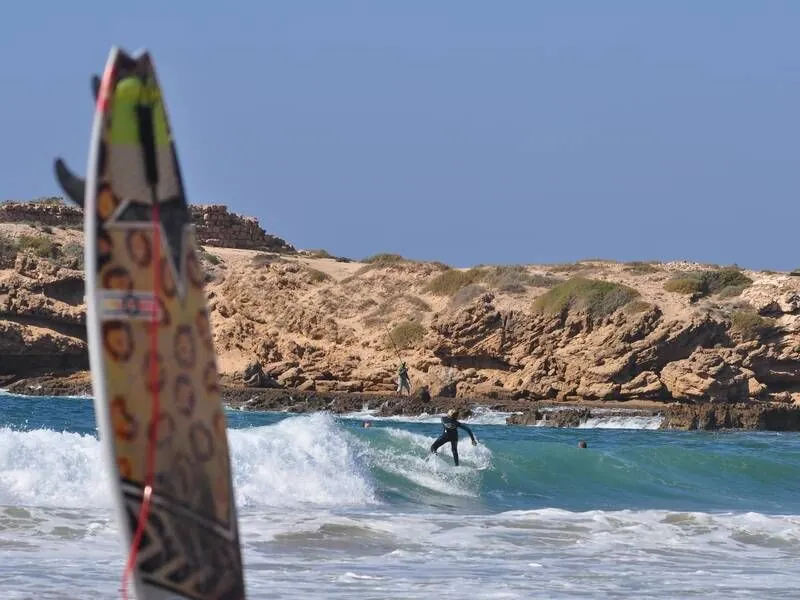
Devil's Rock
A sandy beach break on the long beach south of Taghazout. The waves break low and slowly, which makes it forgiving for beginners and a good place for improvers to work on their turns. The name sounds scarier than the spot.
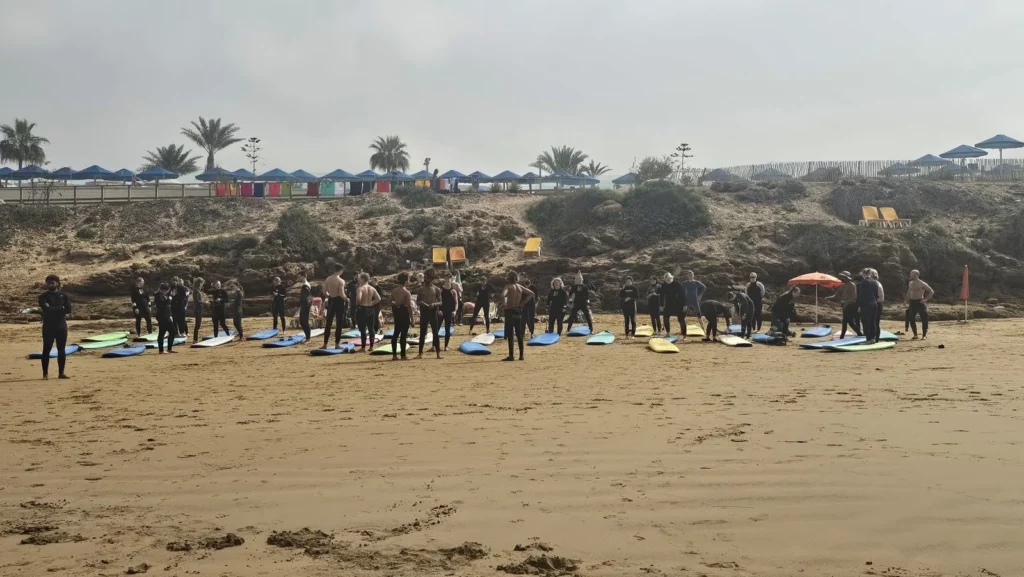
Crocro
Also called Crocodile Beach, named after a crocodile-shaped rock. This is an open beach near Tamraght where beginners and improving surfers find plenty of whitewater and gentle green waves. It is a classic place for first lessons.
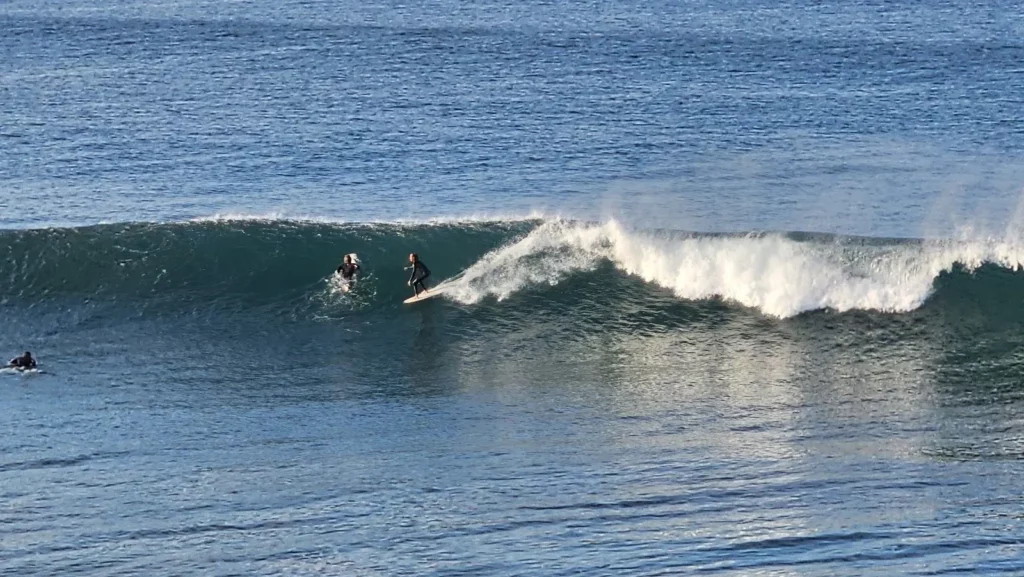
Banana Point
A relaxed right-hand point at the edge of Aourir, the so-called Banana Village, named after the plantations around it. The wave peels from the rocky headland towards the river mouth. It is popular with longboarders and intermediates and works on most tides, over sand with a few rock plates.
Plan your session
Which spot for which level
How you approach surfing in Taghazout depends on your level. Use these three profiles to pick a spot that matches your skills and the conditions of the day.
Beginner
You are learning to stand up or you ride whitewater. Stay on the sandy beaches south of the village, surf with an instructor and a soft-top board, and pick small days.
Good spots: Crocro, Devil's Rock, Hash Point on small days
Intermediate
You catch green waves, turn both ways and can paddle back out through the break. You can start on the points, but choose your tide and swell carefully and stay out of the crowd at the busiest peaks.
Good spots: Banana Point, Hash Point, Panoramas, Mysteries on moderate days
Advanced and expert
You are comfortable on rock, in current and in powerful surf, and you know the etiquette of a crowded point. Go in winter, check the forecast daily and never surf the big spots alone.
Good spots: Anchor Point, Killers, Boilers
Travel info
Best time for surfing in Taghazout
Surfing in Taghazout is possible all year. The main swell season runs from October to March, when long-period northwest swells roll in regularly and the points work best. December to February brings the biggest and most powerful waves, while October, November and March are usually more balanced.
From April to September the surf is usually smaller and more regular. That is the best time for beginners, longboarders and anyone who wants warm water and relaxed lessons. Mornings are normally cleaner, because the wind often turns onshore around midday.
| Months | Waves | Water | Wetsuit | Best for |
|---|---|---|---|---|
| December to February | Biggest and most powerful | About 16 to 18 degrees | 4/3 mm | Advanced and expert surfers |
| October, November and March | Regular, balanced | About 18 to 20 degrees | 3/2 mm | Intermediates and improving surfers |
| April, May and September | Moderate, 3 to 6 ft | About 19 to 21 degrees | 3/2 mm or shorty | All levels |
| June to August | Smaller and gentler | About 21 to 24 degrees | Shorty or lycra | Beginners and longboarders |
Figures are typical ranges, not guarantees. Water and swell change from year to year.
Swell, wind and tide in plain words
Swell is the energy that travels across the Atlantic and makes the waves. Taghazout faces west, so northwest swell lines up with most of the points. The bigger and longer the swell period, the more powerful the waves.
Wind decides how clean the waves are. A light offshore wind from the land holds the waves up and makes them smooth. Wind from the sea makes them messy. Tide matters most on the reefs and points, where the best state differs from spot to spot, as the table above shows.
Check the forecast on Surfline Check the forecast on Windguru
Travel info
Wetsuit and boards
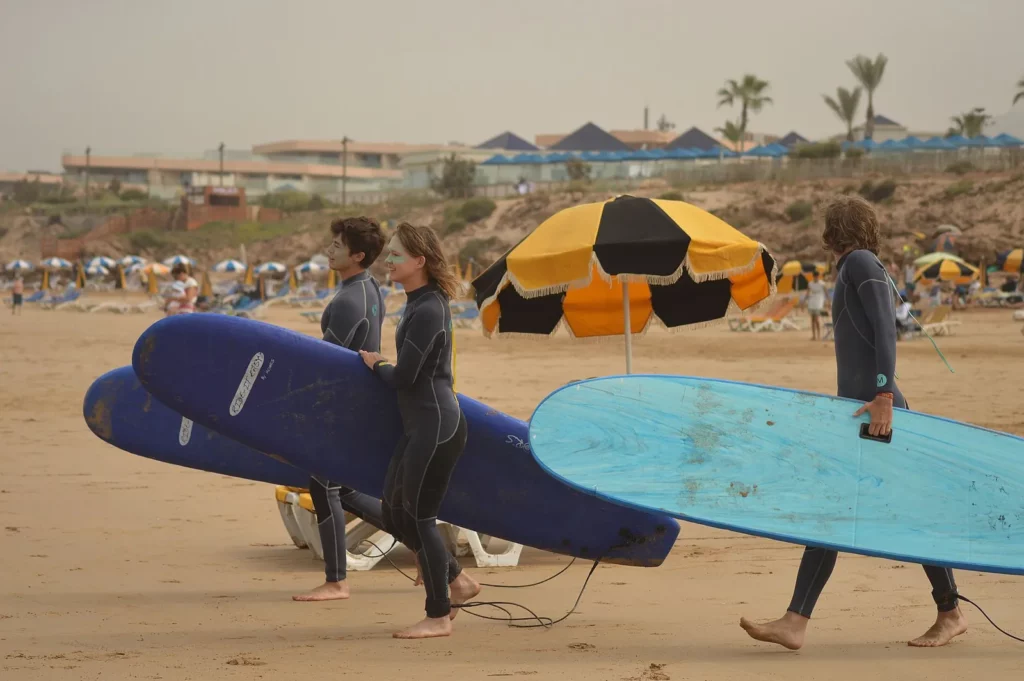
For surfing in Taghazout in winter, bring or rent a 4/3 mm wetsuit. In autumn and spring a 3/2 mm is usually enough, and in summer a shorty or lycra top is fine. Reef booties are useful at the rocky entries of the points, and a hooded or thicker suit helps if you feel the cold.
Beginners should learn on a soft-top board, which is forgiving and safer in the water. Intermediates often move to a funboard or mini-malibu, and the points reward a longer board on small days. Hard boards are for experienced surfers who are comfortable with them, and they are not recommended for beginners.
You can rent boards and wetsuits in the village and at most surf camps, so you do not have to fly with your own equipment unless you want to.
Surf smart
Safety and etiquette in the water
Surfing in Taghazout is safe and enjoyable when you respect the rocks, the currents and the other surfers in the water. These three habits matter most.
Rocks, reef and urchins
Many of the points break over rock, and sea urchins live on the reefs. Wear booties where the entry is rocky, watch where you step, and take a minute to learn the entry and exit before you paddle out.
Currents and rips
There is often a current along the points, and bigger swells create strong rips. Do not fight a rip. Swim or paddle across it until you are out of the flow, then come back in. If you are in doubt, stay out.
Crowds and priority
The surfer closest to the peak, or the one already up and riding, has priority. Do not drop in, do not snake the line-up and always control your board. Say hello, be patient, and you will be treated much better in the water.
Take out travel insurance that covers surfing, and do not paddle out alone if you are a beginner. A surf lesson on your first days is the quickest way to learn the local conditions safely.
Travel info
Where to stay and how to get there
Most visitors planning surfing in Taghazout fly into Agadir Al Massira airport and reach the village in about 30 to 40 minutes by transfer or taxi. From there the choice is mainly about atmosphere.
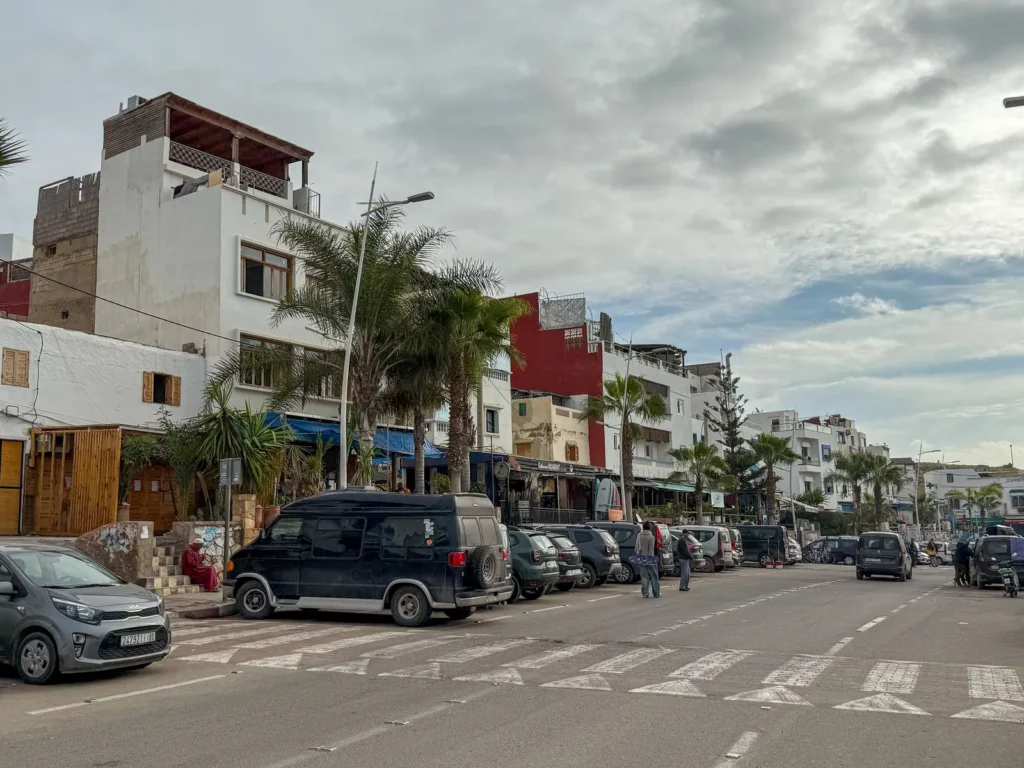
Taghazout village is the busiest base, with cafés, restaurants and the closest access to the famous points. Tamraght and Aourir to the south are quieter and closer to the beginner beaches. Agadir is a big city with more shops but less surf culture.
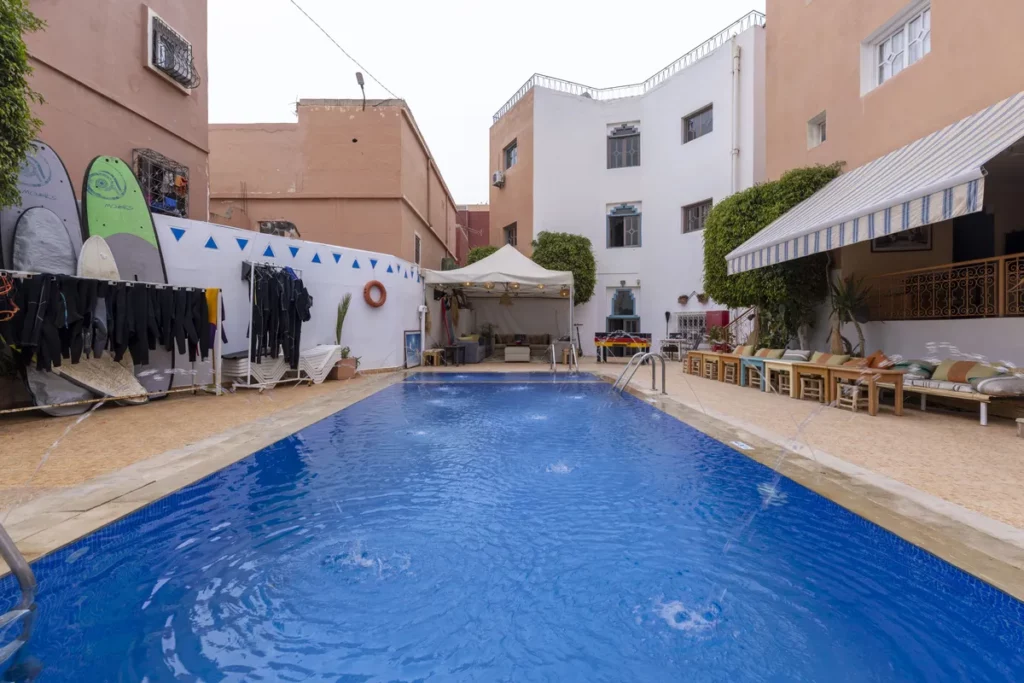
ChillOut Surf Camp is in the Taghazout Bay area, close to the waves described in this guide. Our packages include accommodation, meals, surf lessons and equipment, and most of them include an airport or bus station transfer, so you can arrive and start surfing without organising anything.
Day trips
Beyond Taghazout: Imsouane and more
If the waves are small or you want a change, drive north to Imsouane, a small fishing village built around one of the longest and most forgiving right-hand waves in Morocco. It takes roughly an hour and a half by car and is ideal for longboarders and surfers who want long, easy rides.
Closer to home, the beaches around Tamraght and Aourir give you more options on days when the points are flat or too big. Most surf camps arrange day trips, so ask what is possible during your stay.
Imsouane or Taghazout: which one is right for you? Where to stay in Taghazout How to get to Taghazout
Good to know
Frequently asked questions
When is the best time for surfing in Taghazout?
The main season for surfing in Taghazout is October to March, with the biggest waves from December to February. Beginners often prefer April to September, when the waves are smaller and the water is warmer.
Is Taghazout good for beginners?
Yes. The sandy beaches around Tamraght and Aourir, such as Crocro and Devil's Rock, have gentle waves and are where most surf lessons take place. The famous points are for more experienced surfers.
Which is the best surf spot in Taghazout?
Anchor Point is the most famous and the best wave when it is working, but it is for intermediate to expert surfers. For learning, Crocro and Devil's Rock are better choices.
What wetsuit do I need in Taghazout?
A 4/3 mm in winter, a 3/2 mm in autumn and spring, and a shorty or lycra in summer. The water ranges from about 16 to 24 degrees Celsius over the year.
How far is Taghazout from Agadir airport?
About 20 km north of Agadir, which is roughly 30 to 40 minutes by car from Agadir Al Massira airport. Many surf camps, including ours, can arrange the transfer.
Can I surf in Taghazout in summer?
Yes, surfing in Taghazout works in summer too. Summer waves are smaller and gentler, and the water is warm, which suits beginners and longboarders. Mornings are usually the cleanest.
Do I need to book surf lessons?
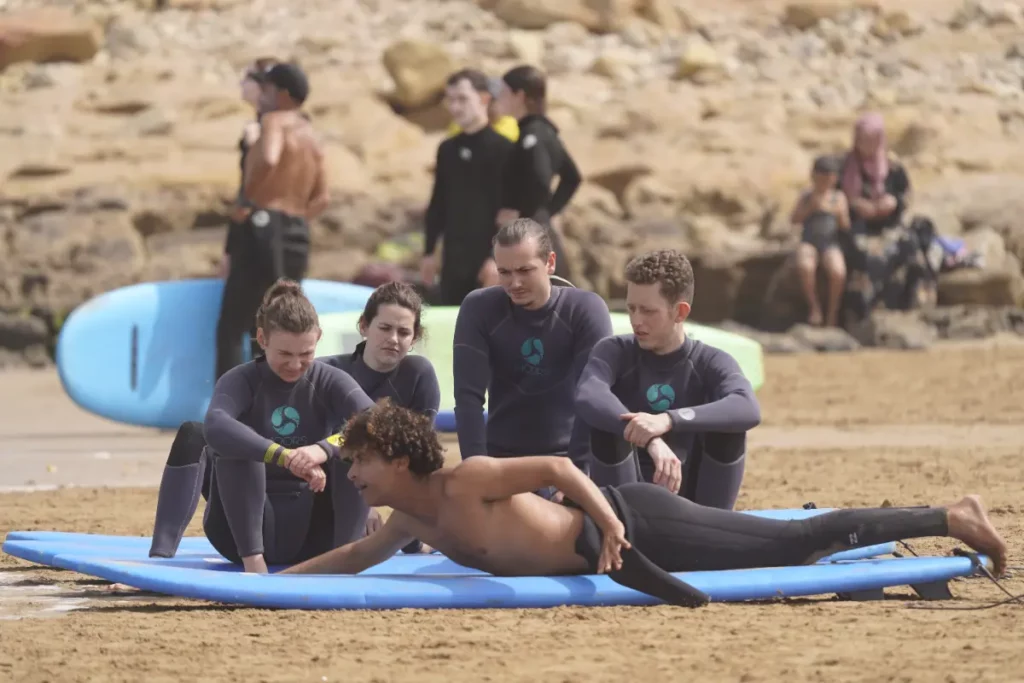
You do not have to, but lessons are strongly recommended for beginners and for your first days if you are new to the area. An instructor knows which spot suits the day's conditions.
How far is Imsouane from Taghazout?
Imsouane is north of Taghazout, roughly an hour and a half by car. It is known for one of the longest and most forgiving right-hand waves in Morocco.
Ready for surfing in Taghazout?
Pick a package with lessons, meals and accommodation, or send us your dates and questions and we will help you choose.